Iceland Ice Cave Season
Natural ice caves are winter creatures, carved by autumn meltwater and stable only while the cold holds. A few glacier experiences keep running when the snow retreats, and one is open in every month. Here is how the Iceland ice cave season actually works, and what you can book in each part of it.
Two Ice Seasons on One Island
The single most common ice cave question is not which cave or which glacier but when. The answer has two halves, because Iceland effectively runs two ice cave seasons at once: the famous one, when the natural blue caves open, and the rest of the year, when a smaller set of options carries the ice. This guide covers both, with the honest version of the calendar.
How the Caves Form Each Year
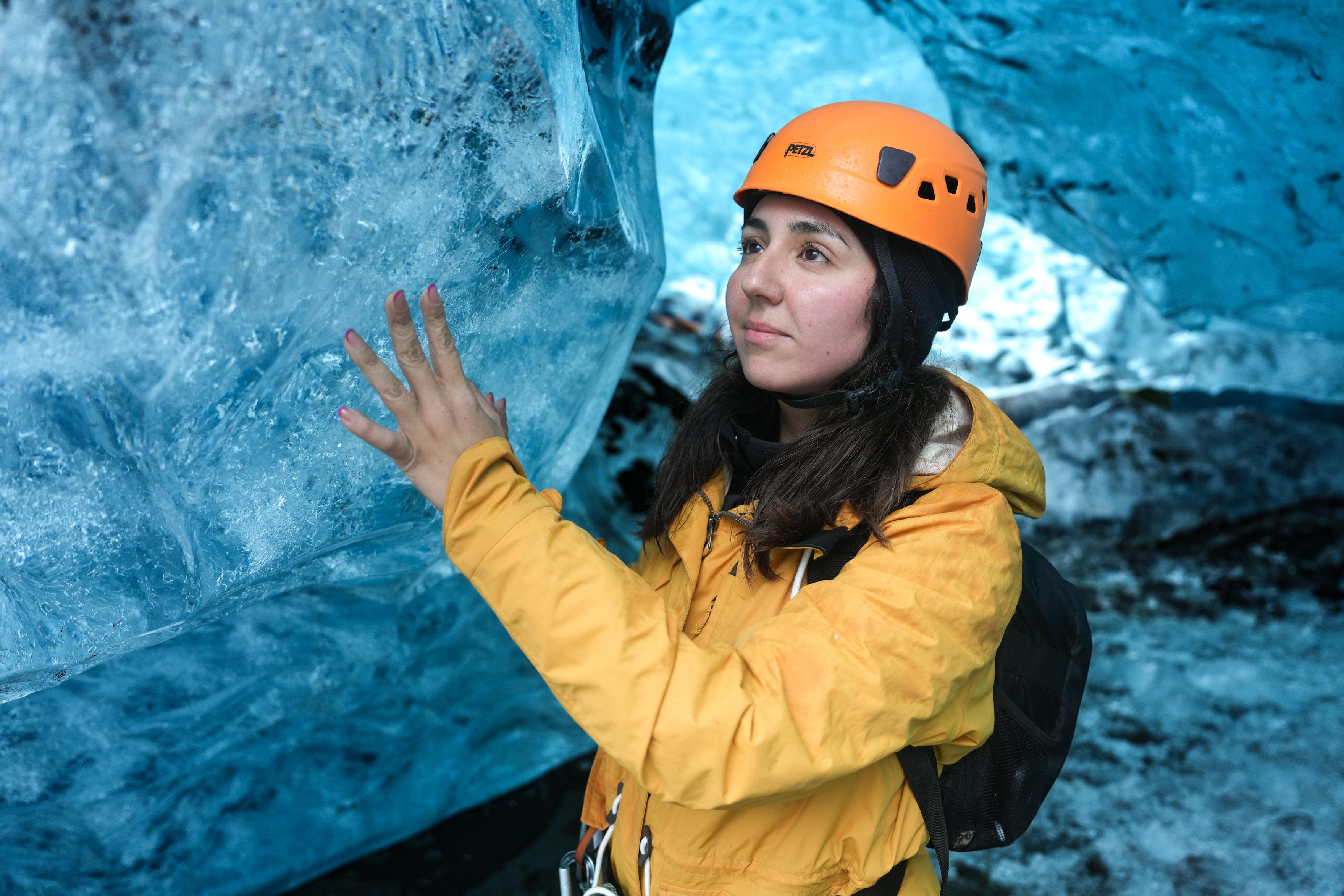
A natural ice cave under a glacier begins as summer meltwater. Warm months send rivers across and under the ice, and that water cuts chambers and tunnels into the glacier's body. When autumn arrives the taps shut off, the cold moves in, and the freshly cut rooms freeze into structures stable enough to walk through. Winter's snow then seals and preserves them.
This is why the guides search rather than navigate. Operators on Vatnajökull describe hunting for the new caves every autumn, because the rooms they walked the previous season have usually changed beyond recognition or collapsed entirely. The practical consequence for you is liberating rather than disappointing: every natural cave visit is to a place that exists only this season, in this form, and the tour you join has found that year's version.
The Natural-Cave Window
The natural blue caves under Vatnajökull are at their best in winter, and their listings say so plainly: most of the Jökulsárlón blue-cave trips run October or November to March or April, the months when freshly carved chambers are at their largest, their bluest and their most reliably open. Our recommended tour's operator, Glacier Trips, publishes an October to April season on its own site, and the cave is selected for the conditions of the day throughout it.
What the honest version of this section cannot give you is a fixed opening date, because there isn't one that is true every year. Cave formation depends on each summer's melt and each autumn's freeze, so the season's start and end breathe by weeks. Treat any specific month boundary you read anywhere, including here, as approximate, and treat the live booking calendar on each tour listing as the actual authority on whether a given date is running.
Ice Outside the Window
When the natural caves close or grow unpredictable, three kinds of ice remain. The Langjökull tunnel is the constant: carved and maintained rather than found, and stated by its operator to run year-round, with individual departures still subject to weather. In summer its approach changes, with a mountain bus carrying visitors from Húsafell to the glacier's edge before the monster truck takes over, but the ice is the same deep blue corridor in April and August alike. Our Langjökull page covers it in full.
Katla runs year-round: both operators list departures in every season, verified on the live listings on 21 September 2026, which puts the cave outside the winter-only pattern of the Vatnajökull blue caves. Weather and ice conditions can still alter a given departure. If shoulder-season or late-summer ice matters to your trip, the Katla tour page is where to look. And above Skaftafell, the Blue Ice Maze hike delivers an ice-cave feel year-round, in the glacier's crevasse architecture rather than a single chamber, as our glacier hike page explains.
The Year at a Glance
Put the four experience families side by side and the calendar stops being abstract. The windows below come from the operators' listings, checked on 21 September 2026, and they are approximations, not timetables: conditions and each tour's own booking calendar decide whether a given departure runs.
| Experience | Typical window | What it actually is | Watch out for |
|---|---|---|---|
| Vatnajökull natural blue caves | Most listings run October or November to March or April | Natural chambers under outlet glaciers, found anew each season | Selection and openings follow the season's conditions |
| Katla from Vík | Year-round on both listings | Ash-striped natural cave under Mýrdalsjökull | Compact chamber, reshaped week to week. Weather can alter a departure |
| Langjökull tunnel | Maintained in every month of the year | Man-made corridors cut into the ice cap | A built experience, not a wild cave. Summer approach partly by bus, and departures can still be weather-affected |
| Blue Ice Maze | Year-round on the listing | A glacier hike through crevasse walls with an ice-cave feel, not a guaranteed enclosed cave | The enclosed feeling depends on the season's ice |
Planning by Month
The listing windows above turn into a practical monthly map. Group the year into four stretches and the choices fall out cleanly. These are the operators' own published windows, checked on 21 and 22 September 2026. A listing's season says nothing about a specific date. Deep winter is the blue-cave high season, with the strongest cave selection, the shortest daylight and the coldest preparation, and booking ahead matters most here because one flagship Vík tour is flagged likely to sell out and another popular Jökulsárlón trip warns of extremely limited availability.
| Months | Blue caves under Vatnajökull | Year-round options | Notes |
|---|---|---|---|
| October | First openings: our recommended tour (October–April on its operator's site) and the seasonal two-glacier trek (October–December) start. Most other blue caves open November | Katla from Vík, the Langjökull tunnel, the Blue Ice Maze and all compared glacier hikes except the October–December two-glacier trek | Early-season caves are freshly cut. Shoulder weather can still move a departure |
| November – March | Full blue-cave season: every Jökulsárlón and Skaftafell cave listing in our comparison runs in these months | Katla from Vík, the Langjökull tunnel, the Blue Ice Maze and all compared glacier hikes except the October–December two-glacier trek | Strongest selection, shortest daylight, coldest prep. Book the cave first |
| April | Late season: the October–April tours finish. Most November–March listings have closed | Katla from Vík, the Langjökull tunnel, the Blue Ice Maze and all compared glacier hikes except the October–December two-glacier trek | Days lengthen fast. Late-winter caves at their most photographed |
| May – September | Blue caves closed or unreliable on every listing we compare | Katla from Vík, the Langjökull tunnel, the Blue Ice Maze and all compared glacier hikes except the October–December two-glacier trek | Ice in summer means Katla, the tunnel or the maze. Save the blue caves for a winter return |
Booking Timing and Cancellations
Two rules cover the practical side. Book the cave before you book anything else for that day, because the strongest tours sell out first and everything else on the south coast can flex around a fixed departure slot. And know your cancellation cover: every tour compared on this site can be cancelled free up to 24 hours before departure, which turns an Icelandic weather reshuffle from a crisis into a rebooking.
Weather cancellations, when an operator makes them, are resolved through your booking, and tours otherwise run in most conditions. The glacier does not check your itinerary, but your cancellation cover means it never has to.
Your Month, Your Cave
From deep-winter blue chambers to a tunnel maintained through every month, every option in this guide is compared and bookable, with free cancellation up to 24 hours ahead.
Compare ice cave tours