Best Ice Caves in Iceland
Iceland has natural blue caves under Vatnajökull, ash-striped chambers under Mýrdalsjökull, a man-made tunnel through Langjökull and lava tubes that never melt at all. This guide sorts the country's ice caves by glacier, season and effort, so you can match the right one to your trip.
Four Kinds of Ice Experience, One Guide
Not every cave labelled ice cave in Iceland is the same thing, and the differences decide your trip more than any price list. Some exist only in winter. Some run in July. One is carved by machines and lit from within. Understanding which is which takes about five minutes, and this guide is those five minutes.
The Natural Blue Caves of Vatnajökull
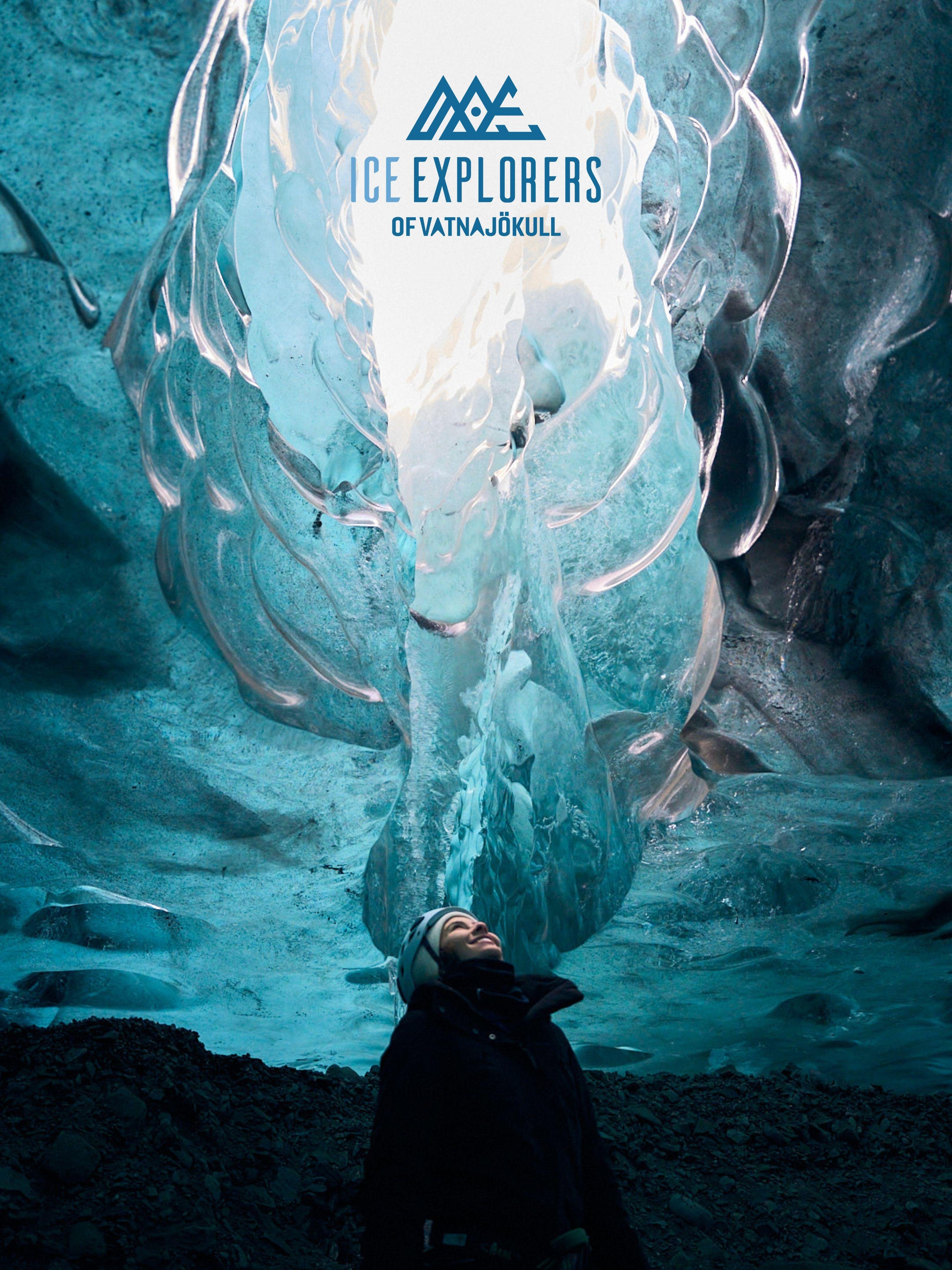
The classic images, cathedral-scale chambers of sapphire and crystal blue, come from the natural caves beneath Vatnajökull, Europe's largest glacier. Each autumn, meltwater finishes carving the season's chambers and cold weather stabilises them, and each year the guides must go looking for the new ones, because last winter's cave is usually gone. What you are standing in, when you stand in one, is ice compressed for centuries until almost no air remains, which is precisely why it glows blue.
Most of these caves sit under outlet glaciers on Vatnajökull's southern flank, reached from two gates. From Jökulsárlón in the east, super jeeps cross the sandur to Breiðamerkurjökull, where the season's crystal and blue caves form. From Skaftafell in the west, tours climb onto Falljökull and pair the cave with a glacier hike. Operators such as Glacier Trips, Local Guide, Ice Explorers and Arctic Adventures run the strongest versions of both, and we compare them in the ice cave tour comparison.
One honest caveat belongs here. The natural caves are natural, which means their shape, size and even existence shift with the season. Tour descriptions and photos show previous winters, and a cave named crystal one year may be a different chamber the next. The right reaction to that is not disappointment but the opposite: you are seeing something that exists only now.
Katla, the Ash-Striped Cave
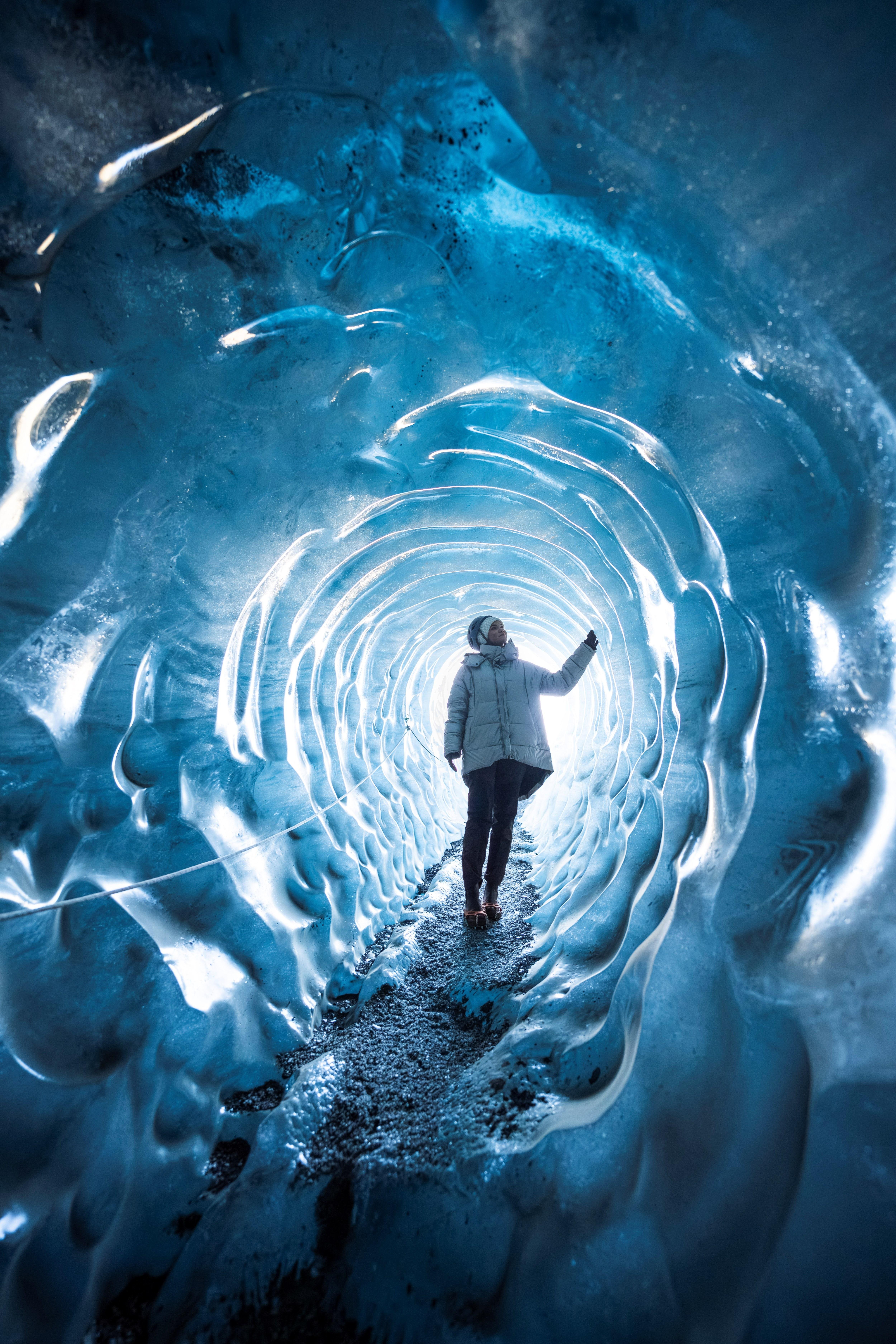
Katla's cave sits under Mýrdalsjökull above the village of Vík, roughly three hours from Reykjavík and closer to the capital than any natural cave under Vatnajökull. It looks like nothing else in the country: black bands of volcanic ash, erupted by the Katla volcano beneath the ice, stripe the blue like rings in a tree. Every dark line is an eruption the glacier swallowed.
The trip has a different texture too. A high-clearance super jeep crosses the black Mýrdalssandur outwash plain, a ride travellers rank alongside the cave itself, and the walk from vehicle to entrance is short. Families join from age 6 on the main tour. Our Katla ice cave tour page compares the two Vík operators in detail.
The Langjökull Ice Tunnel
Second glacier, second philosophy. Into the Glacier is a corridor system carved into Langjökull, the country's second-largest ice cap, and maintained rather than found. Because it is man-made, it answers the one question natural caves cannot: it is open in every month of the year. In midsummer, when the blue caves are closed or unpredictable, this is how you stand inside a glacier.
The approach is by an 8x8 monster truck from Húsafell, about two hours from Reykjavík, with a Reykjavík-departure version adding transport and sightseeing. Inside, the walls expose decades of ice layers and seams of volcanic ash, and children 12 and under join free. Our Langjökull ice tunnel page compares both departures.
Summer Ice and the Blue Ice Maze
Between the natural caves and the tunnel sits a clever third way. On Falljökull above Skaftafell, one operator routes a hike through a natural labyrinth of towering ice walls, narrow passages and crevasses, a Crevasse Track that delivers what the operator calls an ice-cave feel year-round. You are in the glacier's architecture rather than a single chamber, and the trip runs when the blue caves cannot.
It is beginner friendly and reached by a short 4x4 transfer, which makes it a strong summer answer for travellers who missed the cave season. The details sit alongside the other glacier hikes on our Vatnajökull glacier hike page.
And the Caves That Are Not Ice at All
Iceland's most-visited caves overall are lava tubes, caves formed by flowing magma rather than compressed snowfall, and they never melt, close for the season or move. They belong to a different family of day trip, with formations in stone rather than blue ice, and they are outside the scope of this site's comparisons. If your itinerary is lava-cave shaped rather than glacier shaped, they are worth their own search.
Choosing Between Them
Three questions decide it. When are you travelling? If outside the core winter window, the tunnel, the year-round Katla cave and the maze are your ice. How close to Reykjavík do you need to stay? Katla from Vík is the nearest natural cave, Langjökull the nearest one maintained in every month. And how much walking do you want? The tunnel asks the least, the Jökulsárlón caves a little, the Skaftafell combinations the most, and they reward it.
The strongest versions of every choice are compared on this site, from the Vatnajökull ice cave tours themselves to the Skaftafell, Katla and Langjökull pages. Pick the glacier that fits your route, let the ice cave season guide pick the month, and the cave takes care of itself.
Stand Inside the One That Fits
Every cave in this guide is bookable from this site, compared on price, pace and rating, with free cancellation up to 24 hours before departure.
Compare ice cave tours