Vatnajökull Glacier
One ice cap, dozens of outlet glaciers, volcanic ash sealed in the layers and the deepest ice in the country. Vatnajökull is the reason this site exists, and this guide introduces the glacier behind most of the tours compared here.
How Vatnajökull Works
Most of what this site compares happens on or under one feature: Vatnajökull, the ice cap that covers roughly eight percent of Iceland and holds the title of Europe's largest glacier. The exceptions, the Katla cave under Mýrdalsjökull and the Langjökull tunnel, have their own pages. Knowing how the ice cap is put together turns a nice morning on the ice into something you can actually read, so here is the glacier in plain language.
The Ice Cap at a Glance
Vatnajökull is not a mountain glacier but an ice cap, a dome of ice thick enough to bury the landscape beneath it and heavy enough to reshape it. It is Europe's largest glacier, a fact every operator on this site states with pride, and it clothes a large corner of the country in white, feeding rivers, hiding volcanoes and setting the weather for everything downwind.
The ice holds history in its layers. Snowfall compresses into bands, and volcanic ash from Iceland's eruptions settles into dark seams between them, a chronicle you can see with your own eyes inside the Langjökull tunnel's walls and in the ash-striping of glacier ice across the country. Beneath Vatnajökull itself, geothermal heat and volcanic systems are part of what keeps the glacier dynamic rather than static.
The Outlet Glaciers You Can Walk
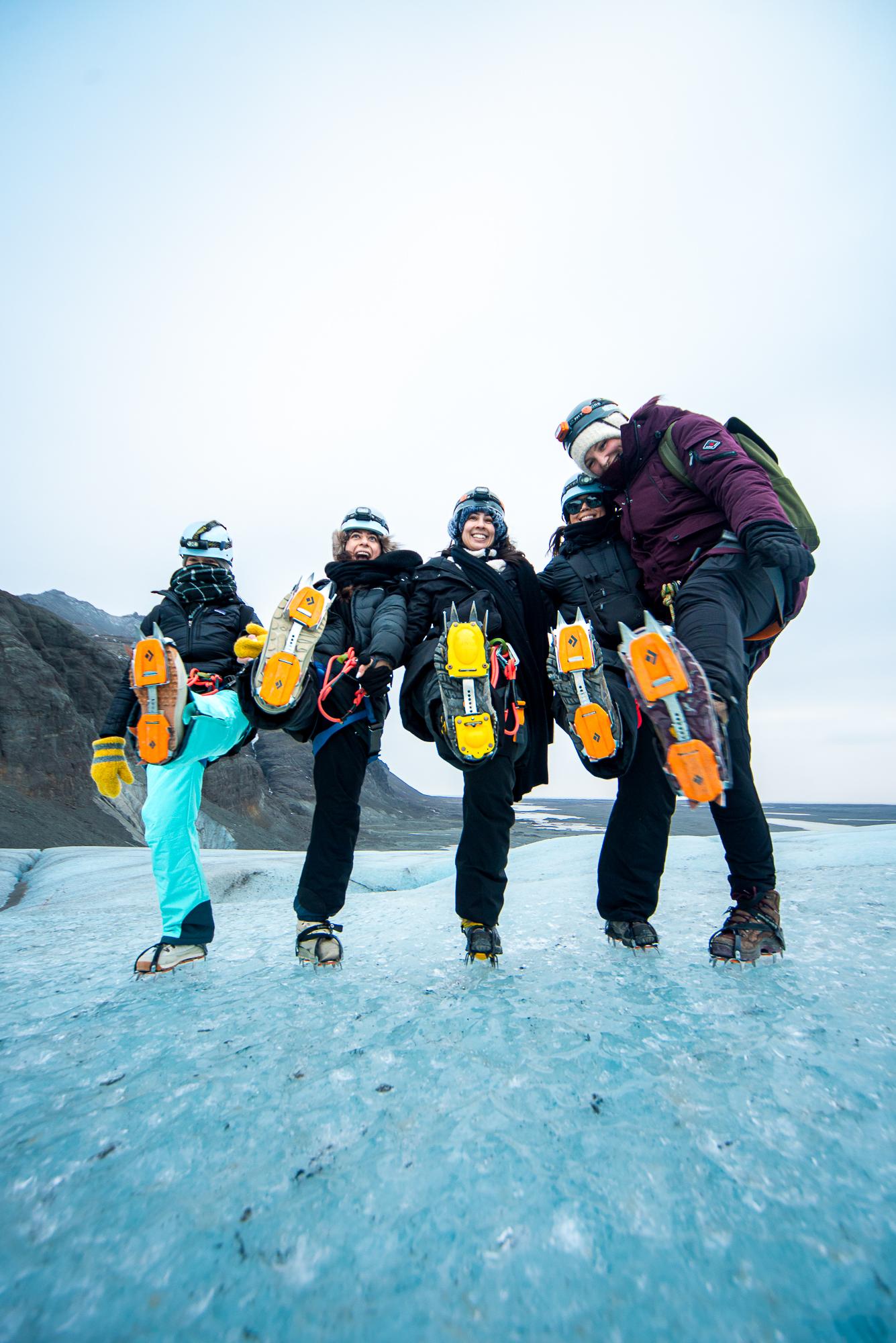
An ice cap drains through outlet glaciers, tongues of ice that flow out of the main mass and down toward sea level, and these are where travellers actually set foot. On the southern side, three names matter. Falljökull, the falling glacier, drops steeply from the cap above Skaftafell and is the setting for most of the Skaftafell ice cave tours and glacier hikes compared here. Breiðamerkurjökull stretches toward the south-east coast and is the glacier behind the Jökulsárlón ice cave trips and the recommended glacier hike. And Virkisjökull, the fortress glacier, neighbours Falljökull in quiet, crossed only by a two-glacier trek that leaves the crowds behind.
Above them all presides Öræfajökull, the ice-crowned massif containing Iceland's highest peak, which frames the skyline of the national park and gives the two-glacier trek its most photographed views.
Jökulsárlón and the Lagoon
Where Breiðamerkurjökull meets the sea, icebergs calve into Jökulsárlón, a lagoon of drifting blue-white ice that has become one of the country's defining images. Tours meet in its main parking area, beside the cafeteria, and travellers arriving for a cave or a hike get the lagoon as the opening act: icebergs that fell from the glacier you are about to walk on, floating in water the colour of the ice they came from.
The practical geography matters for planning. Jökulsárlón sits about 380 km east of Reykjavík on the Ring Road, with Skaftafell about an hour's drive further west. Most ice cave travellers base themselves between Höfn and Kirkjubæjarklaustur and treat the two gates, lagoon and national park, as one region.
A Glacier That Keeps Changing
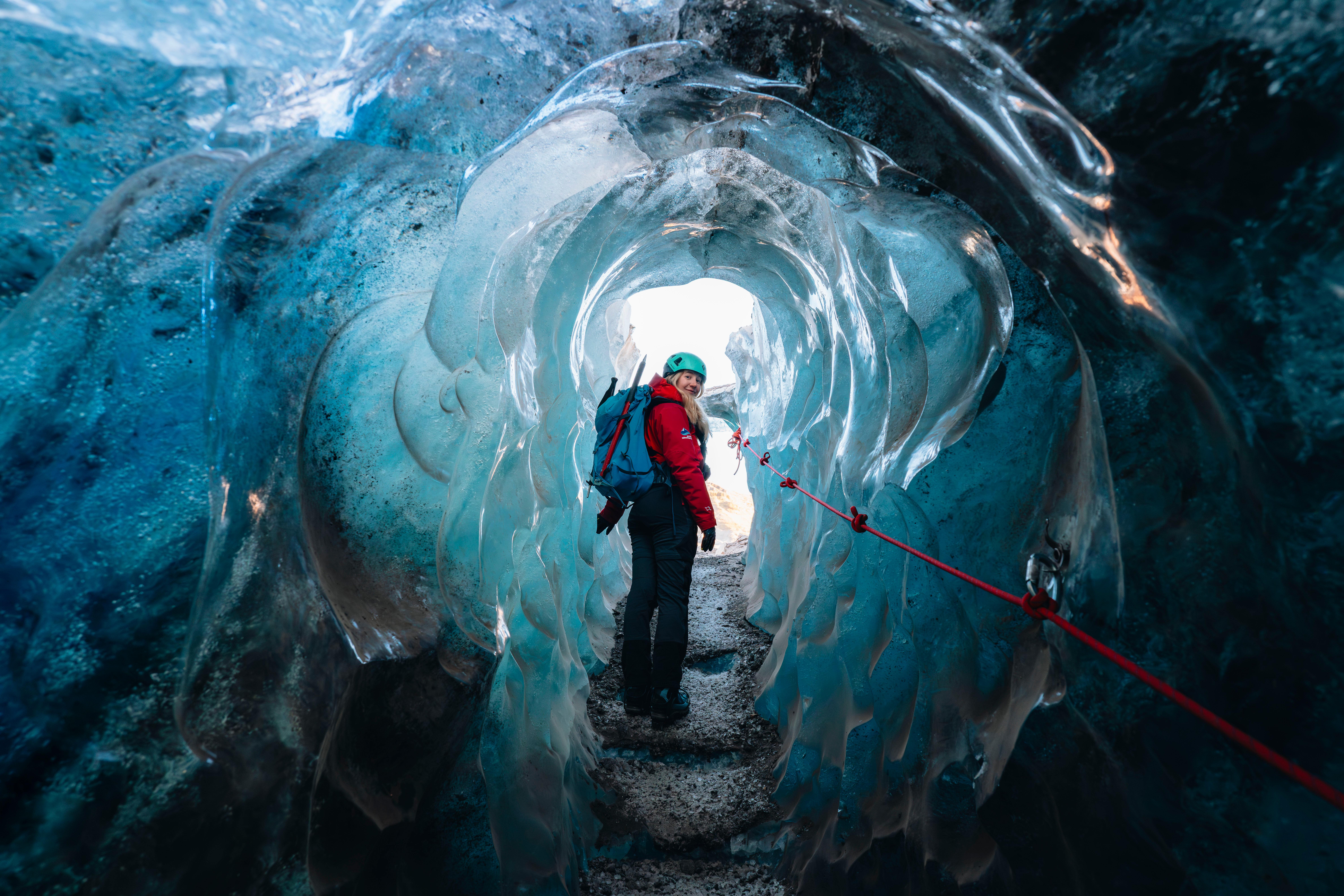
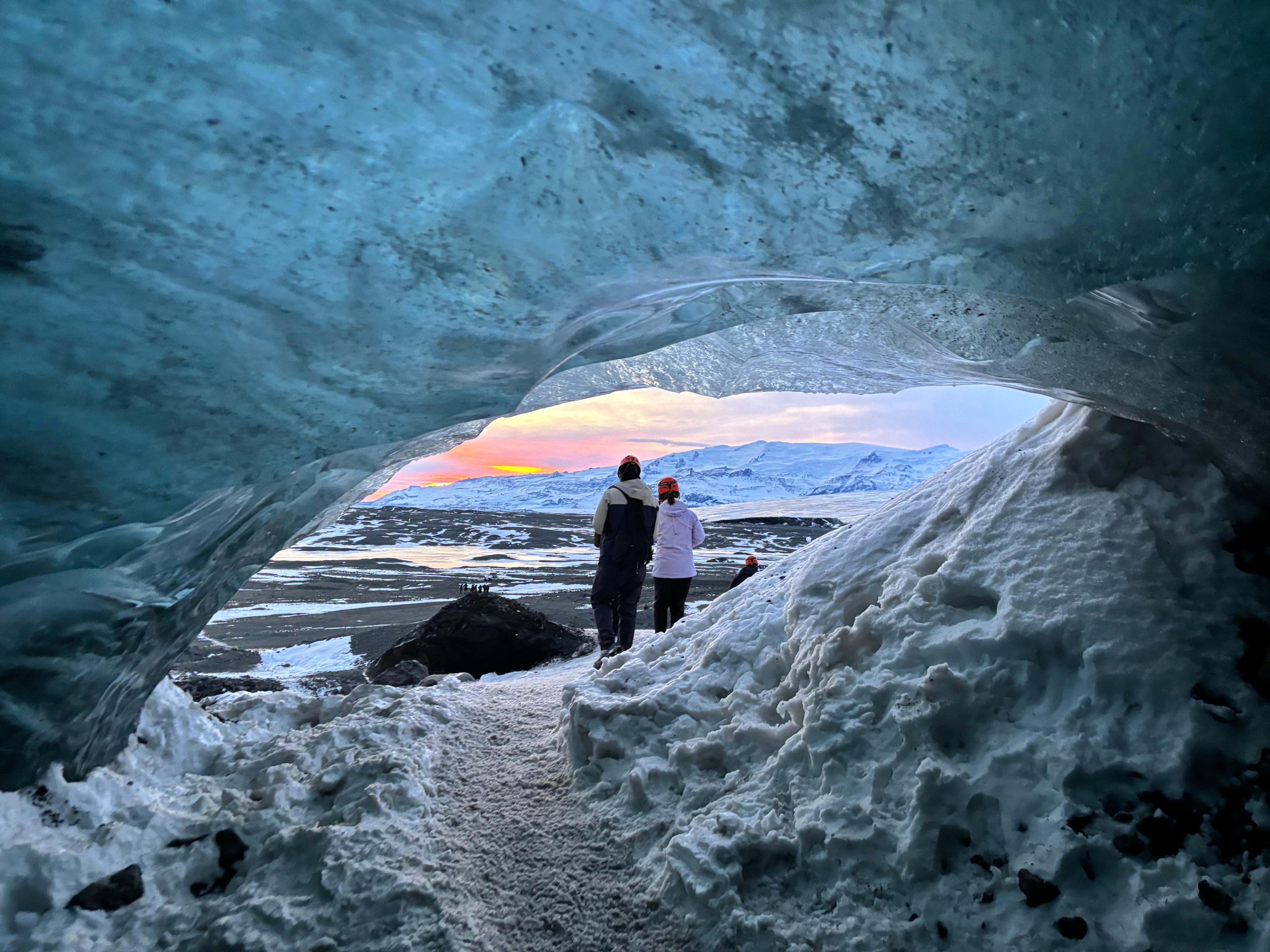
The final thing to understand about Vatnajökull is that it is a verb. The operators who work on it describe ever-changing ice, caves that form and vanish within a season, and routes that shift as the glacier moves. The guides who lead the tours compared on this site are not following trails, they are reading current conditions and choosing the day's safest and best route, which is the entire argument for going with one.
That dynamism is also why the strongest experiences here feel different every year. The cave you stand in this winter will not be the cave of next winter, and the glacier you hike this summer will have moved by the next. Few destinations on earth hand you that explicitly. For the practical side of getting onto or under the ice, start with the ice cave tour comparison or the glacier hikes.
The Glacier Is Waiting
Ice caves under the cap, hikes across its outlets and a lagoon full of its icebergs, compared and bookable with free cancellation up to 24 hours ahead.
Explore the tours